
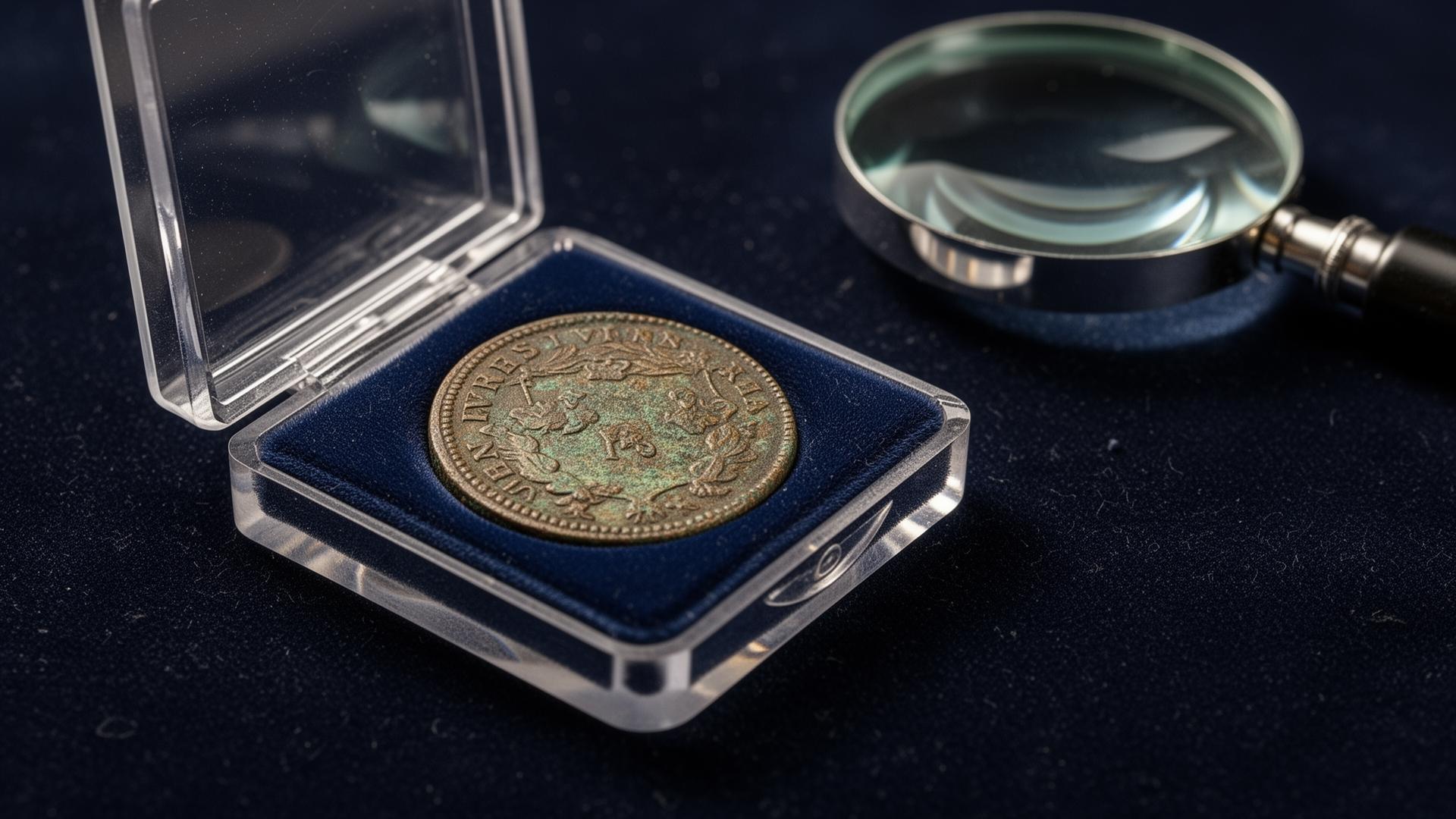
Penny Values: Which Pennies Are Worth Money?
From wheat pennies to rare copper errors, learn which pennies in your collection could be worth hundreds or even thousands of dollars.
The United States has produced billions of pennies since 1793, making them the most common coin in American history. Most are worth exactly one cent. But certain dates, mint marks, errors, and metal compositions turn ordinary pennies into coins worth $100 to $200,000 or more. If you are sorting through a jar of old coins or inherited a collection, this guide from our Coin Values series will help you identify which pennies deserve a closer look — and which ones are just pocket change.
One important fact: every penny minted before 1982 is made of 95% copper. At current copper prices, each one is worth roughly two to three cents just in metal content. That is not a fortune, but it means pre-1982 pennies are always worth more than face value. Beyond melt value, key dates, mint errors, and high-grade condition can multiply a penny's worth by thousands. US Gold and Coin buys valuable pennies of every type and offers free appraisals based on real market data, not outdated price guides.
Wheat Penny Values (1909–1958)
Full dedicated guide to wheat penny values by year →
Lincoln wheat pennies were minted from 1909 to 1958 and feature two wheat ears on the reverse — the back of the coin. They replaced the Indian Head cent and introduced the Lincoln portrait that still appears on pennies today. Wheat pennies are the most commonly collected U.S. coin series, and with good reason: they are affordable to start collecting, widely available, and include several dates worth serious money.
Most common-date wheat pennies in circulated condition sell for $0.03 to $0.25 each. Dates from the 1940s and 1950s were produced in enormous quantities and are worth keeping but not individually valuable. The money in wheat pennies comes from the early dates and the key mint marks. The 1909-S VDB is the most famous Lincoln penny ever produced — it was the first year of issue, struck at the San Francisco mint, and carries designer Victor David Brenner's initials on the reverse. Only 484,000 were minted before the initials were removed. In Good condition, a 1909-S VDB sells for $700 to $2,000. In gem uncirculated grades, auction prices have exceeded $100,000.
The 1914-D is another powerhouse. Denver produced just 1.19 million that year — a tiny number for a denomination that routinely saw mintages in the tens of millions. A circulated 1914-D brings $200 to $3,000 depending on condition. In Mint State, prices climb past $50,000. The 1922 plain (no D) is a die error where the Denver mint mark failed to strike, leaving what appears to be a Philadelphia issue — but Philadelphia did not produce pennies that year. Strong examples of the 1922 plain sell for $500 to $20,000.
Semi-key dates worth watching include the 1911-S, 1912-S, 1913-S, 1914-S, 1915-S, and 1924-D. None of these will make you rich in low grades, but they trade for $15 to $100 in Good to Fine condition and considerably more in higher grades. Condition is everything with wheat pennies. A common 1944 wheat penny is worth $0.05 in average circulated condition but $3 to $5 in full uncirculated condition with original red luster. If you have nickels from the same era, many follow a similar pattern where condition drives the premium.
1943 Steel Penny Value
Full dedicated guide to the 1943 steel penny →
In 1943, the U.S. Mint switched from copper to zinc-coated steel to conserve copper for the war effort. The result was a silver-gray penny that looks nothing like the familiar brown Lincoln cent. Over a billion were struck across Philadelphia, Denver, and San Francisco. Standard 1943 steel pennies in circulated condition sell for $0.10 to $0.50. Uncirculated examples with bright original zinc luster bring $1 to $10. They are common, inexpensive, and a staple of any beginning collection.
The real story of 1943 is the copper error. A small number of 1943 pennies were accidentally struck on copper planchets left over from 1942 production. Roughly 20 authenticated 1943 copper cents are known to exist across all three mints. The 1943-D bronze cent holds the auction record at $1.7 million. Even lower-grade examples have sold for $100,000 or more. These are among the most valuable error coins in all of American numismatics.
How to test yours: hold a magnet to the penny. A steel penny will stick firmly. If your 1943 penny does not stick to a magnet, it could be copper — or it could be a steel penny that someone copper-plated after the fact, which is a common novelty alteration worth nothing extra. Only professional authentication from PCGS or NGC can confirm a genuine 1943 copper cent. The reverse happened in 1944: a handful of pennies were accidentally struck on leftover steel planchets. Authenticated 1944 steel cents have sold for over $400,000.
1982 Penny: Copper vs. Zinc
Full dedicated guide to Lincoln Memorial penny values (1959–2008) →
1982 is the most interesting year in modern penny production. Midway through the year, the Mint switched from the traditional 95% copper composition to a cheaper copper-plated zinc core. Both versions were produced at both Philadelphia and Denver, and both large date and small date varieties exist. That gives us seven distinct 1982 penny varieties — a puzzle that keeps collectors busy and occasionally produces surprises.
The variety to watch for is the 1982 small date copper penny from Philadelphia (no mint mark). This coin exists but is scarce, and high-grade examples have sold for $5 to $15,000 or more at auction. The small date is identified by comparing the size and position of the numerals — particularly the 8 and 2 — against known reference images. The difference is subtle but unmistakable once you know what to look for.
How to tell copper from zinc: weigh it. A copper 1982 penny weighs 3.1 grams. A zinc 1982 penny weighs 2.5 grams. Any kitchen scale that reads to a tenth of a gram will work. You can also drop the penny on a hard surface — copper produces a clear, high-pitched ring, while zinc makes a flat, dull thud. All pennies dated 1981 and earlier are copper. All pennies dated 1983 and later are zinc. Only 1982 requires sorting.
Indian Head Penny Values (1859–1909)
Indian Head cents were minted from 1859 to 1909, predating the Lincoln series. Despite the name, the design actually depicts Lady Liberty wearing a Native American headdress — a detail that has sparked debate for over 150 years. The series is popular with collectors because even common dates are over a century old and carry the weight of American history. In Good condition, most dates from the 1880s through 1900s sell for $1 to $10. Scarcer dates from the 1860s and 1870s bring $15 to $100 or more.
The key date is the 1877 Indian Head cent. It had the lowest regular-issue mintage of the series at just 852,500. In Good condition, a genuine 1877 sells for $750 to $2,000. In uncirculated grades with original mint red, prices exceed $50,000. Counterfeits of this date are common, so authentication matters. The 1909-S is the last Indian Head cent and the only one struck at the San Francisco mint — a coin that was instantly collected and saved, yet still commands $400 or more in most grades because of its historical significance.
Semi-key dates include the 1871, 1872, 1878, and 1908-S. The 1908-S was the first Indian Head cent produced outside Philadelphia, making it a milestone coin that collectors seek in any grade. Even heavily worn Indian Head pennies are worth saving. If you find one in a jar of old coins or an inherited collection, set it aside — it is almost certainly worth more than one cent. If you also find quarters from the same period, the Barber series follows a similar pattern of key-date premiums.
Penny Error Coins Worth Money
Mint errors are where ordinary pennies become extraordinary. The most famous is the 1955 doubled die obverse, where the entire obverse design — date, LIBERTY, and IN GOD WE TRUST — shows dramatic doubling visible to the naked eye. In Very Fine condition, a 1955 doubled die sells for $1,000 to $3,000. In Mint State, prices reach $30,000 or more. The 1972 doubled die is another strong variety, with clear doubling on the obverse lettering that brings $200 to $1,000. The 1995 doubled die is the most affordable of the major doubled dies, selling for $20 to $75 in uncirculated condition.
Off-center strikes occur when the planchet is not properly seated in the die collar. The value depends on how far off-center the strike is and whether the date remains visible. A penny struck 5% off-center is a minor curiosity worth $5 to $10. A penny struck 50% off-center with the full date showing can bring $100 to $500. Wrong planchet errors — where a penny is struck on a blank intended for a dime, nickel, or foreign coin — are rare and can sell for $500 to several thousand dollars depending on the planchet.
BIE errors are a collecting niche unique to Lincoln cents. These occur when a small die crack develops between the B and E in LIBERTY, creating what looks like a vertical letter I. They are minor varieties, but a dedicated group of collectors seeks them out, and nice examples sell for $5 to $25. A word of caution: most "errors" people find — especially on social media — turn out to be post-mint damage. Scratches, dings, discoloration, and environmental damage are not mint errors and add no value. If you think you have an error penny, professional authentication from PCGS or NGC is the only way to confirm it.
How to Tell If Your Penny Is Valuable
Check the Date and Mint Mark
Pre-1959 means wheat penny. Pre-1982 means copper. Look for the S and D mint marks below the date on the obverse. No mint mark on Lincoln cents means Philadelphia. Key dates from any era — 1909-S VDB, 1914-D, 1877 Indian Head — command immediate premiums regardless of condition.
Look for Errors and Varieties
Use a magnifying glass or jeweler's loupe. Check for doubling in LIBERTY and IN GOD WE TRUST — especially on 1955, 1972, and 1995 dates. Look for off-center strikes, unusual surfaces, or coins that seem the wrong color for their date. Compare your finds against known error varieties for that year.
Assess the Condition
Uncirculated pennies with original red copper luster are worth significantly more than worn examples. Look for sharp details in Lincoln's hair and coat, and check the wheat ears or memorial for wear. Never clean a penny — cleaning removes the original surface and destroys collector value permanently.
Not sure? Send us a photo or bring your pennies to any US Gold and Coin location for a free expert appraisal.
Most Valuable Pennies Ever Sold
While most pennies will not sell for six figures, these auction records demonstrate that certain pennies are among the most valuable coins in existence. Even common wheat pennies and Indian Head cents are worth multiples of face value.
Have Pennies You Think Might Be Valuable?
Whether you found a box of wheat pennies in the attic, inherited a penny collection, or spotted what might be a rare error, our experts can tell you exactly what your pennies are worth. Free appraisals, no obligation, same-day payment if you decide to sell.
Visit us in Dallas, Austin, Tampa, Fort Worth, Waco, Kansas City, or Overland Park. We also offer mail-in appraisals nationwide. Read our Selling Guide for a full walkthrough of the process.
Penny Values FAQ
Ready to Find Out What Your Pennies Are Worth?
Get a free, no-obligation appraisal from our expert team.