
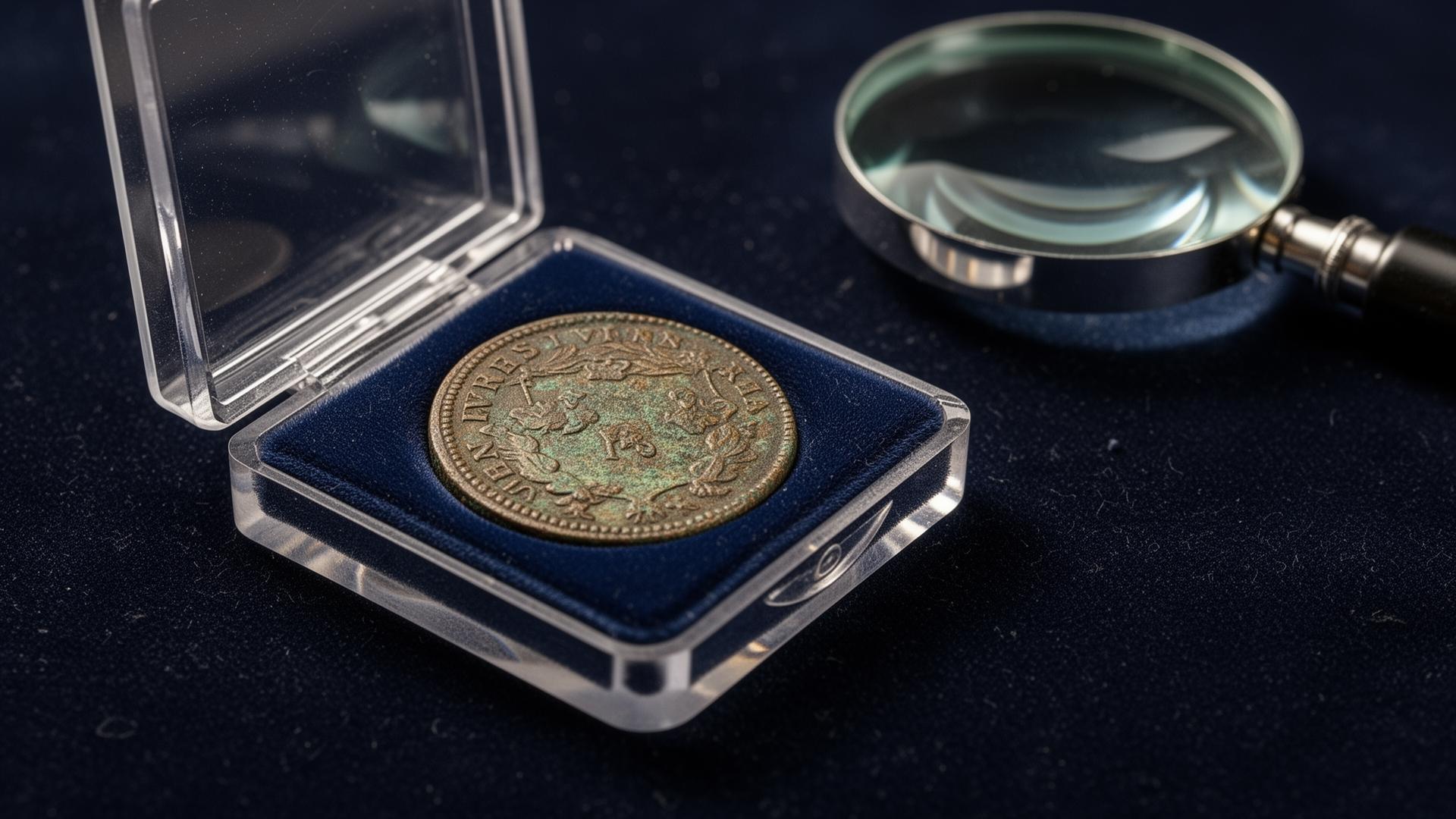
Dime Values: Which Dimes Are Worth Money?
Mercury dimes, Roosevelt silver dimes, Barber dimes, and error coins. Find out what your dimes are worth.
Silver Dimes: Pre-1965 Dimes Are Always Worth More
Full dedicated guide to silver dime values →
Before anything else, here is the single most important fact about dime values: every dime minted in 1964 or earlier contains 90% silver. That means every Roosevelt dime from 1946 to 1964, every Mercury dime from 1916 to 1945, and every Barber dime from 1892 to 1916 is a silver coin. These dimes contain 0.0723 troy ounces of silver each. At current silver prices, that works out to roughly several dollars per coin — regardless of date, condition, or mint mark.
This floor price means you should never spend a pre-1965 dime at face value. Even the most common, most worn silver dime is worth 15 to 25 times its face value in melt alone. Check the edge of any dime: if you see a solid silver color with no copper stripe, it is a silver coin. Clad dimes minted 1965 and later show a distinct copper-colored band on the edge. This quick visual test is the fastest way to sort valuable dimes from common ones. The same silver cutoff applies to quarters and half dollars from the same era.
Beyond melt value, many silver dimes carry collector premiums based on date, mint mark, and condition. Key dates in the Mercury and Barber series can be worth hundreds or thousands of dollars. Even among Roosevelt silver dimes, certain lower-mintage issues from the late 1940s and early 1950s trade well above melt. The sections below break down each series so you know exactly what to look for.
Mercury Dime Values (1916–1945)
The Mercury dime is one of the most beautiful coins ever produced by the United States Mint. Its actual name is the Winged Liberty Head dime — the figure on the obverse is Lady Liberty wearing a winged cap symbolizing freedom of thought. But collectors have called it the "Mercury dime" for over a century because the winged cap resembles the helmet of the Roman god Mercury. Designed by Adolph A. Weinman, the same sculptor who created the Walking Liberty Half Dollar, it is considered one of the finest designs in American numismatics.
Common-date Mercury dimes in circulated condition sell for $2 to $5. That is just slightly above their silver melt value, which means most of the series is affordable for collectors. The coin to know is the 1916-D. Denver produced only 264,000 Mercury dimes that first year — by far the lowest mintage in the series. In Good condition, a 1916-D trades for $800 to $1,500. In Fine to Very Fine, prices climb to $2,000 to $5,000. In uncirculated grades, the 1916-D can reach $30,000 to $50,000 or more. Be cautious: altered mint marks (D added to a common 1916 Philadelphia dime) are one of the most frequently encountered counterfeits in coin collecting.
The 1921 and 1921-D are the next most valuable dates. Production resumed in 1921 after a break in 1917-1920 at some mints, and both the Philadelphia and Denver issues had low mintages. Circulated examples sell for $40 to $250. The 1926-S is a semi-key date at $10 to $100+ in circulated grades, while the 1942/1 overdate — created when a 1941-dated die was re-engraved with a 1942 date — is a dramatic error coin worth $400 to $15,000 depending on grade.
Full Band (FB) designation is critical for Mercury dimes in uncirculated condition. The bands on the fasces (a bundle of rods) on the reverse are often weakly struck. When both horizontal bands are fully separated and distinct, PCGS and NGC designate the coin "Full Bands." This can double or triple the value of an uncirculated Mercury dime. Collectors who assemble complete FB sets are willing to pay strong premiums for dates that are rarely found with full detail.
Roosevelt Dime Values (1946–Present)
The Roosevelt dime debuted in 1946, just a year after President Franklin D. Roosevelt's death. It replaced the Mercury dime and has been in continuous production ever since — the longest-running current US coin design alongside the Lincoln cent. Silver Roosevelt dimes (1946–1964) contain the same 0.0723 troy ounces of 90% silver as Mercury dimes. They trade at or near silver melt value for common dates, with certain lower-mintage issues commanding modest premiums.
The dates to watch in the silver series are the 1949-S, 1950-S, and 1952-S. San Francisco mintages dropped during the late 1940s and early 1950s, and these three dates are consistently the scarcest in circulated rolls. They trade for $3 to $15 in average circulated condition and $12 to $100 in uncirculated grades. The 1964 Roosevelt dime — the last year of silver — was produced in massive quantities (over 929 million in Philadelphia and 1.357 billion in Denver) and is worth its melt value of approximately $1.50 to $2.50 in circulated condition.
Clad Roosevelt dimes minted from 1965 to the present are generally worth ten cents. There are two notable exceptions. The 1982 no-P dime is the only Roosevelt dime ever produced without a mint mark at Philadelphia (which had been using "P" since 1980). Produced in error, these trade for $50 to $300 depending on condition. The 1996-W dime was a special issue included only in 1996 Uncirculated Mint Sets to celebrate the 50th anniversary of the Roosevelt design. It carries the West Point "W" mint mark and sells for $15 to $50 in its original mint set packaging.
Barber Dime Values (1892–1916)
Charles E. Barber designed the Liberty Head dime that bears his name, produced from 1892 to 1916. The same design appeared simultaneously on the quarter and half dollar. Barber dimes are 90% silver and contain the same 0.0723 troy ounces as Mercury and Roosevelt silver dimes. Common dates in circulated condition sell for $3 to $15, putting them in reach of most collectors. The series is collected actively, and even well-worn examples have a market.
The 1894-S Barber dime is one of the most famous coins in American numismatics. Only 24 were struck at the San Francisco mint, and just 9 are known to survive. The reason for such a tiny mintage remains debated — the most popular theory is that they were struck as presentation pieces for mint officials. Authenticated examples have sold for over $1 million. Beyond this legendary rarity, the 1895-O, 1893-O, 1896-S, and 1901-S are genuine key dates that sell for $10 to $250+ in circulated grades and considerably more in uncirculated condition.
Dime Errors Worth Money
Error dimes are coins that left the mint with a manufacturing defect. Not all errors are valuable — minor die cracks and slight off-center strikes bring modest premiums at best. The errors worth real money are dramatic and visually obvious. The 1942/1 Mercury dime overdate is the most valuable dime error in the series, created when a 1941-dated die was re-engraved with 1942 numerals. Both the Philadelphia and Denver versions exist, and they trade for $400 to $15,000 depending on grade and the clarity of the underlying "1" digit.
The 1982 no-P Roosevelt dime is a modern error that anyone can find in circulation. Philadelphia had been placing a "P" mint mark on dimes since 1980, but a small number of 1982 dimes were struck from dies that lacked the mint mark entirely. These sell for $50 to $300. Other dime errors worth checking for include doubled die obverses (look for doubling in the date or lettering), off-center strikes where the design is shifted but the date remains visible ($10 to $200+), wrong planchet errors where a dime was struck on a cent or foreign coin blank ($100 to $5,000+), and broadstrike errors where the coin spreads beyond its normal diameter ($5 to $50+). Clipped planchet errors — where a portion of the blank is missing — are worth $5 to $50 depending on the size of the clip. As with all error coins, authentication matters. Many supposed errors are actually post-mint damage caused by machinery, tools, or wear. The same principle applies to nickel errors and errors across every denomination.
How to Tell If Your Dime Is Valuable
Step 1: Check the Date and the Edge
Look at the date first. If it reads 1964 or earlier, you have a 90% silver dime worth at least $1.50 to $2.50 in melt value. Confirm by checking the edge — silver dimes show solid silver with no copper stripe. If the edge shows a copper-colored band, the coin is clad and worth face value unless it is a key date or error.
Step 2: Identify the Design Type and Mint Mark
Barber dimes (1892–1916) show Liberty wearing a cap with a laurel wreath. Mercury dimes (1916–1945) show a winged Liberty head. Roosevelt dimes (1946–present) show FDR's portrait. For Mercury dimes, the mint mark is on the reverse, near the bottom left by the "E" in ONE. For Roosevelt dimes, the mint mark moved from the reverse (1946–1964) to the obverse (1968–present), just above the date. For Barber dimes, the mint mark is on the reverse below the wreath.
Step 3: Assess the Condition
Condition determines whether a dime is worth its minimum value or many times more. On Mercury dimes, look at Liberty's hair detail and the bands on the reverse fasces. On Roosevelt dimes, check the detail on Roosevelt's hair and the torch on the reverse. A coin with sharp, unworn details is worth significantly more than one that is smooth and worn. For valuable dates, professional grading from PCGS or NGC can confirm the grade and maximize your return when selling. Read our Selling Guide for more on how grading affects coin values.
Have Dimes Worth Selling?
Whether you have a single key-date Mercury dime or a jar full of pre-1965 silver dimes, US Gold and Coin will evaluate them for free. We have purchased over $50 million in coins and precious metals since 2010 and pay the same day you accept our offer.
Visit us in Dallas, Austin, Tampa, Fort Worth, Waco, Kansas City, or Overland Park. We also accept insured mail-in submissions nationwide.