
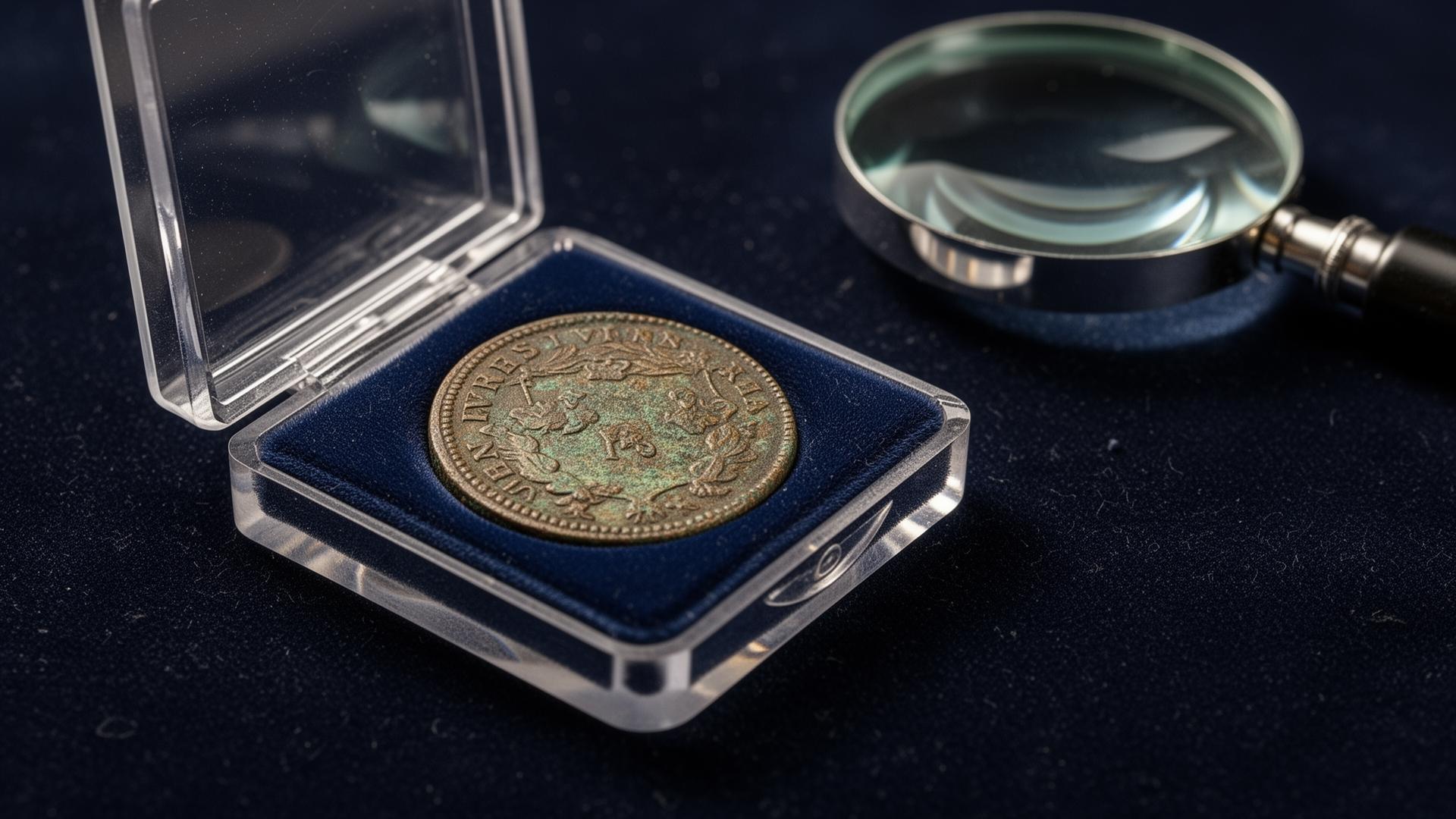
The Coin Grading Scale Explained
The difference between a $50 coin and a $5,000 coin often comes down to where it falls on the coin grading scale. Here's how to read it and why it matters.
A coin's grade is the single biggest factor in its value after the date and mint mark. Two coins with the same date, same mint mark, and same type can differ in value by 10x or 100x based on their condition. Understanding how grading works gives you a major advantage whether you're buying, selling, or just trying to figure out what you have.
The US coin market uses the Sheldon Scale — the standard coin grading scale — a 1–70 numbering system originally developed by Dr. William Sheldon in 1949. The scale ranges from Poor (P-1) for a coin that's barely identifiable to Mint State (MS-70) for a coin with absolutely no imperfections under magnification. Most coins you'll encounter fall somewhere between Good (G-4) and Mint State (MS-63).
The Coin Grading Scale: 1 to 70
The jump in value between grades is not linear. For many coins, the difference between MS-64 and MS-65 might be 2x to 5x in price. The difference between MS-65 and MS-67 can be 10x to 50x. This is why accurate grading matters so much when buying or selling.
What Are Proof Coins?
Proof coins are not a grade — they're a method of manufacture. The US Mint strikes proof coins using specially polished dies and planchets, applying multiple strikes at higher pressure. The result is a coin with mirror-like fields and frosted design elements (called "cameo" or "deep cameo" contrast).
Proof coins are graded on their own scale: PR-60 through PR-70 (sometimes written PF-60 through PF-70). A PR-70 proof coin has absolutely no imperfections. Proof coins with strong contrast between the frosted design and mirrored background receive a "DCAM" (Deep Cameo) designation, which adds a premium.
Modern proof coins (1936–present) are sold directly by the US Mint in proof sets. They're struck at the San Francisco Mint (S mint mark) or West Point Mint (W mint mark). Common-date modern proof coins are typically worth $5 to $30. Older proof coins from the 1800s and early 1900s are much rarer and can be worth thousands.
Proof coins should not be removed from their original cases or holders. Handling them without gloves leaves fingerprints that reduce their value.
PCGS vs NGC: The Two Major Grading Services
Two companies dominate professional coin grading in the United States: PCGS (Professional Coin Grading Service) and NGC (Numismatic Guaranty Company). Both use the Sheldon scale and encapsulate graded coins in tamper-proof plastic holders called "slabs."
Both services are considered equally reputable by major dealers and auction houses. Coins graded by PCGS or NGC sell for significantly more than ungraded ("raw") coins because the grade has been verified by expert professionals. The slab also protects the coin from environmental damage and handling.
There are differences in opinion about which service grades more consistently or conservatively. Some collectors prefer PCGS for US coins and NGC for world coins. In practice, both produce reliable results, and either company's holder is accepted by every major coin buyer and auction house.
Other grading services exist (ANACS, ICG, and others), but coins in PCGS and NGC holders command the highest market prices. If you're considering having coins graded, these two are the standard.
How Much Does It Cost to Grade a Coin?
Professional grading costs vary based on the service level and declared value of the coin.
Prices increase for coins with declared values above $3,000 and again above $10,000. Both services also charge annual membership fees ($25–$150+) and shipping/handling fees.
Note: These costs are approximate and change periodically. Check PCGS.com and NGCcoin.com for current pricing.
When Is Professional Grading Worth It?
Grading makes financial sense when the difference in value between grades exceeds the cost of grading. A good rule of thumb:
Grade it if:
The coin is worth $150+ raw and a higher-than-expected grade could significantly increase its value. Key-date coins, high-grade Morgan dollars, gold coins, and anything you suspect might be MS-65 or higher are strong candidates.
Don't grade it if:
The coin is common and worth less than $75. The grading fee plus shipping and insurance will eat into (or exceed) any value increase. Common-date silver coins, circulated modern coins, and anything in low grades (below VF-20) usually aren't worth the cost.
Always grade it if:
You have a coin that might be rare, an error, or a high grade you're unsure about. A $30 grading fee is trivial compared to the potential value difference. A raw 1916-D Mercury dime you think might be VF could be worth $800 or $8,000 depending on the grade.
Not sure if your coins are worth grading? US Gold & Coin can evaluate your coins for free and advise you on whether professional grading would increase their value before you spend the money. Contact us for a free appraisal.
How to Evaluate Coin Condition Yourself
You don't need to assign an exact Sheldon grade. You just need a general sense of condition to know whether a coin is worth pursuing further. Here's what to look for:
Check the high points first.
On a Morgan dollar, look at Liberty's hair above her ear and the eagle's breast feathers on the reverse. On a Lincoln cent, check Lincoln's cheekbone and jawline. The high points wear first, so they tell you how much circulation the coin has seen.
Look for luster.
Original mint luster is the cartwheel-like sheen you see when you tilt a coin under a light. Coins that still have full luster have seen little to no circulation. Partial luster means light wear. No luster at all means moderate to heavy circulation.
Watch for cleaning.
Cleaned coins have an unnatural brightness, fine hairlines visible under magnification, or a "washed out" appearance. Compare a suspect coin to one you know hasn't been cleaned. The difference is usually obvious. Our inherited coin collection guide covers why cleaning is so damaging in detail.
Use proper lighting.
Evaluate coins under a single directed light source, not overhead fluorescent lights. Tilt the coin slowly to reveal surface details, contact marks, and luster patterns.
Handle coins by the edges.
Never touch the faces of a coin. Oils from your skin cause permanent damage over time.
If you're selling rather than collecting, you don't need to grade your coins yourself. That's what appraisals are for. Our experts at US Gold & Coin grade thousands of coins per year and can give you an accurate assessment of condition and value in minutes.
Not Sure What Grade Your Coins Are?
Our experts have graded and appraised millions of dollars in coins. We'll tell you exactly what you have, what grade it's in, and what it's worth — for free, with no obligation. Read our Selling Guide for a full walkthrough of the process.
Visit us in Dallas, Austin, Tampa, Fort Worth, Waco, or Kansas City. We also offer mail-in appraisals nationwide.
Coin Grading FAQ
Ready to Find Out What Your Coins Are Worth?
Free expert appraisals. No obligation. Same-day payment if you decide to sell.